Average Bills for 1 Bed Flat UK 2026
The average monthly bill total for a one-bedroom flat in the UK in 2026 lands somewhere between £200 and £320, depending on where you live, how the property is heated, and how the council band works out. London sits at the upper end, naturally – while smaller towns in the North and Midlands sit at the lower end. When you’re trying to budget, the £120 range between them isn’t trivial.
The figures below break down what each component typically costs, where you can flex spending, and where you can’t. The numbers reflect the April 2026 Ofgem price cap and confirmed council tax rates for 2026/27, which is as current as anyone can be without knowing the next cap announcement.
What’s the Real Monthly Total?
For a typical one-bedroom flat occupied by one or two adults, the breakdown looks roughly like this:
- Gas and electricity: £88 to £140 per month. Based on Ofgem’s typical low-usage household profile (1,800 kWh electricity, 7,500 kWh gas per year), a low-usage flat averages around £110 to £115 a month per month under the current price cap rules.
- Water: £25 to £45 per month. The 2026/27 average annual water bill in England and Wales is £639. Most one-bed flats use less than the national average, so £25 to £45 is realistic. Metered properties used by one or two people often come in at the lower end.
- Council tax: £130 to £200 per month. This is the most variable line. Band A and B (where many one-bed flats sit) averages £130 to £170 per month across England. London boroughs and Welsh local authorities tend to be lower; some Northern councils run higher. The 2026/27 average Band D council tax in England is £2,392, with most authorities increasing 4 to 5% on the previous year.
- Broadband: £25 to £40 per month. Standard fibre broadband typically runs £25 to £35; superfast and gigabit packages run £35 to £50. Most providers increased prices by 6 to 7% in April 2026.
- TV Licence: £13.13 per month. Annual cost of £157.50 if you watch live TV or use BBC iPlayer. Worth dropping if you only stream Netflix, Disney+, etc.
- Contents insurance: £8 to £20 per month. Optional but advisable. Depends heavily on belongings value and location.
Total: roughly £290 to £450 per month, with most one-bed flats landing in the £290 to £370 range depending on usage and location.
Where Costs Vary Most
Three factors drive the bulk of the variation between flats:
Council tax band and location
The same one-bedroom flat in Westminster and Newcastle pays vastly different council tax. Westminster’s Band A is around £590 per year. Newcastle’s Band A is around £1,300 per year. That’s nearly £60 per month of difference for an identical property in different council areas.
Within London, the variation is severe. Westminster, Kensington and Chelsea, and Wandsworth historically have low council tax rates. Outer London boroughs (Barnet, Hounslow, Croydon) typically run two to three times higher despite housing similar properties.
Outside London, council tax follows local authority funding rather than property value. Northern and Welsh councils generally charge more per band because their funding base is smaller. Surrey and Hampshire flats often have lower bills than Yorkshire equivalents in the same band.
Heating system
Gas central heating remains the cheapest mainstream heating option for the volumes a flat typically uses. Electricity-only heating (storage heaters, panel heaters, electric underfloor heating) costs roughly 3 times more per kWh than gas, which translates to £40 to £80 per month extra for an electrically-heated flat compared to a gas-heated equivalent.
Flats in older buildings without gas connections face this cost permanently. Newer flats often have communal heating systems, where heat is generated centrally and distributed to individual units. The unit costs of communal heating vary enormously and aren’t subject to the Ofgem cap, so bills can be higher than expected. Communal heating contracts are typically locked in by the freeholder, so individual leaseholders have limited ability to switch.
Property efficiency
EPC ratings translate directly into running costs. A flat rated A or B typically costs £50 to £100 less per month to heat than an equivalent flat rated E or F, regardless of size. Insulation, double or triple glazing, and the boiler’s efficiency all contribute to this.
For prospective buyers or tenants, the EPC certificate’s estimated annual energy cost is one of the most useful figures on the document. It’s often more accurate than asking the previous occupant about their bills.
Regional Comparisons
The same one-bed flat in different parts of the UK can produce wildly different bill totals. A rough comparison:
- London (Zone 1-2) typically lands at £310 to £380 per month total, with council tax often the lowest line but rent and ground rent typically considerable on top.
- London (Zone 3-6) is closer to £290 to £350 per month total. Council tax tends to be higher than central London despite cheaper property values.
- Manchester, Birmingham, Leeds typically run £270 to £330 per month total. Lower council tax than London, similar energy and broadband costs.
- Smaller towns in the North and Midlands (Sheffield, Newcastle, Stoke) often run £260 to £320 per month total. The lower property values aren’t always reflected in proportionally lower council tax, but other costs do drop.
- Wales averages £270 to £330 per month total, with council tax often slightly higher than equivalent English authorities but utility costs broadly similar.
- Scotland runs £250 to £310 per month total. Council tax (or its equivalent) is structured differently and often lower than English equivalents, though Northern locations with severe winters drive up heating costs.
Where Can You Reduce Bills?
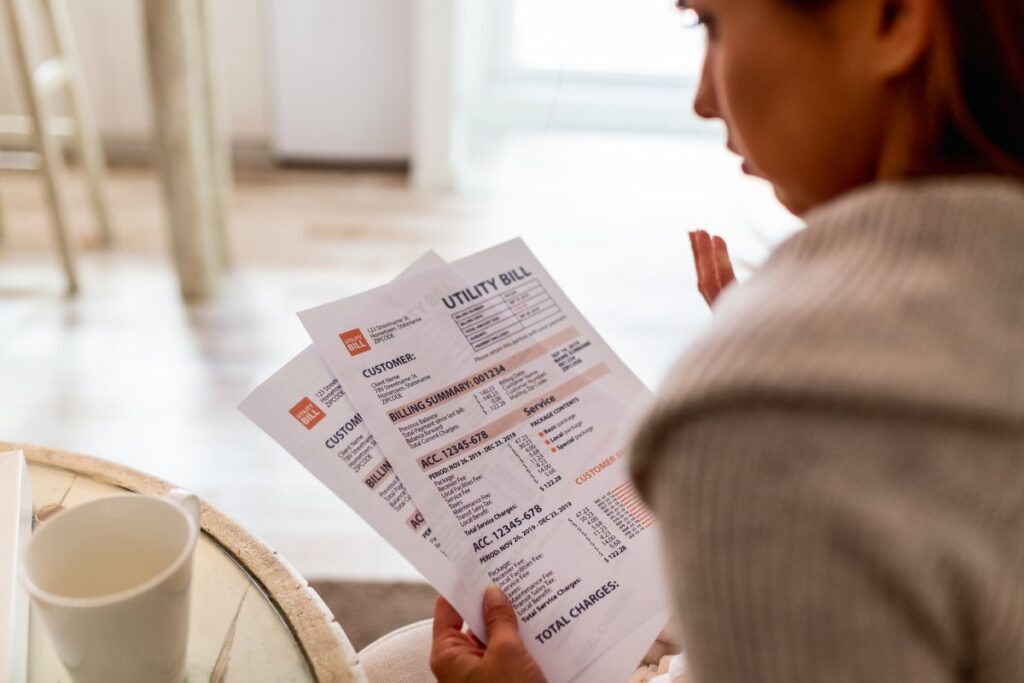
The flexibility in a one-bed flat’s bills is real but not unlimited.
Energy
The Ofgem price cap is now the baseline most fixed tariffs benchmark against. There are sometimes tariffs marginally below the cap, but the savings are modest (£5 to £15 per month).
Heating habits matter more than tariff choice. A thermostat set at 19°C rather than 22°C saves around 10% on heating costs. Heating only the rooms in active use can save 20 to 30% in a flat with multiple radiators.
Smart meters and smart thermostats provide visibility on usage that often produces 5 to 10% reductions through behavioural changes alone.
Council tax
Council tax is fixed by your local authority and band. The main lever is checking your band is correct. Some properties (particularly older flats and conversions) are banded incorrectly and can be challenged. The Valuation Office Agency handles band challenges and the process is free.
A single occupant gets a 25% discount on council tax. Don’t forget to claim this if you live alone.
Broadband
Broadband prices increased substantially in 2025 and 2026. Switching providers at the end of a contract typically saves £5 to £15 per month. Comparison sites are useful here.
Water
Switching to a meter often saves money in a one-bed flat. The threshold is roughly: if there are more people in the property than bedrooms, you’re usually better off without a meter. For a one-bed flat with one or two occupants, a meter usually delivers lower bills.
TV Licence
If you only watch on-demand streaming services (Netflix, Disney+, Prime, Apple TV+, Paramount+) and don’t watch any live TV or use BBC iPlayer, you can legally drop the TV Licence. This saves £157.50 per year.
What This Means If You’re Buying or Selling a One-Bed Flat
Running costs influence what one-bed flats are worth in different ways.
For buyers, the EPC rating’s projected energy cost is a useful tie-breaker between similar flats. A flat costing £30 per month less to heat is effectively worth £3,600 more over 10 years.
For sellers, EPC ratings increasingly affect buyer interest and offer levels. Flats rated D or below are likely to face downward pressure as the 2030 EPC C rental deadline approaches and owner-occupier buyers factor in future upgrade costs.
For investors and landlords, the bills total is one of the figures that drives tenant demand. Flats with all-inclusive bill packages typically command rent premiums of 10 to 15% over equivalent flats where tenants pay bills directly.
Sell Your Flat Without the Wait
If you’re looking to sell a one-bed flat quickly and the running costs of holding it empty are starting to mount up, or if EPC compliance ahead of the 2030 deadline is making the prospect unappealing, we offer a direct alternative. We buy flats across England and Wales regardless of EPC rating, condition, or leasehold complications. With a cash offer within 24 hours and completion in as little as seven days, plus no estate agency fees, legal fees, or holding costs eating into your net proceeds.
FAQs
What are the average monthly bills for a one-bed flat in the UK?
Typically £290 to £370 per month for a typical one-bed flat occupied by one or two adults, covering gas, electricity, water, council tax, broadband, and TV licence. Insurance and other discretionary costs add £10 to £30.
Why are council tax bills different for similar flats?
Council tax depends on the local authority and the property’s council tax band. Identical flats in different parts of the UK can pay £40 to £80 per month difference in council tax alone.
How much is the average energy bill for a one-bed flat?
Around £88 to £140 per month under the April 2026 Ofgem price cap, depending on heating type, insulation, and usage. Electric-only flats run substantially higher than gas-heated equivalents.
Do I need a TV licence in a one-bed flat?
You need one if you watch live TV (on any device or platform) or use BBC iPlayer. If you only use on-demand streaming services like Netflix, you don’t need one.
Is a water meter cheaper for a one-bed flat?
Usually yes. The rule of thumb is: if there are more people in the property than bedrooms, you’re better off without a meter. One or two people in a one-bed flat typically save money on a meter.
Can I claim the single occupant council tax discount?
Yes, if you’re the only adult living in the property. The discount is 25% off the standard council tax bill and must be claimed through your local authority.
How much does broadband cost in a one-bed flat?
Standard fibre broadband runs £25 to £35 per month. Gigabit and full-fibre packages run £35 to £50. Most providers increased prices by 6 to 7% in April 2026.