Laing Easiform Housing: Construction, Common Problems, Mortgages & Buying Advice
Around 85,000 Laing Easiform homes were built in the UK between 1919 and the early 1970s, which makes it one of the most common non-traditional construction types in the country. The system used cast-in-situ concrete rather than the prefabricated panels that most other non-standard construction methods relied on, which is why Easiform homes generally fare better than their post-war prefab cousins when it comes to longevity and mortgage availability. They’ve also avoided the defective designation under the Housing Act 1985, which makes them technically mortgageable when many other non-standard types simply aren’t.
That said, “mortgageable” doesn’t always translate to “easy to sell”, because the non-standard construction label affects buyer perception, lender criteria, and your ongoing maintenance considerations in ways that are worth understanding properly. Whether you’re buying, selling, or already living in a Laing Easiform property, knowing what makes them distinctive helps you make better decisions about what comes next.
How Laing Easiform Houses Were Built
John Laing & Son Ltd developed the Easiform system from 1919 onwards, designed for rapid construction of housing during the post-WWI shortage and again after WWII when the country needed homes fast.
The construction method involves pouring concrete directly on-site into temporary metal moulds (called shuttering) to form the property’s walls, and once the concrete had cured, the shuttering was removed and the roof was added. This is “cast-in-situ” construction, which is distinct from the precast concrete panels used in many other non-traditional types like Airey, Cornish Unit, Wates, and Reema homes, and it’s the reason Easiform properties have generally aged better than their precast cousins.
The properties were built in several variants over the decades you should be aware of. Type 1 / MK1 properties (built between 1919 and around 1925) used solid concrete walls without cavity construction, made with “no-fines” concrete (concrete without sand or fine aggregate, producing a more porous structure). Fewer than 2,000 of these survive, which makes them genuinely uncommon, and these early properties typically have thinner walls and present more mortgage difficulties than the later types. Type 2 / MK2 properties (from the late 1920s onwards) introduced cavity wall construction with an inner and outer concrete leaf separated by a small cavity, with the walls typically reinforced with horizontal steel bars at intervals. This became the more common configuration and accounts for most surviving Easiform properties you’ll come across. MK3 properties (post-WWII) were a refined version of the cavity construction with thicker walls and improved insulation, and these were built in significant numbers from 1946 through to the early 1970s, often as part of local authority housing developments.
How to Spot a Laing Easiform Property
If you’re trying to work out whether a house you’re looking at is Easiform construction, several distinctive features help with identification.
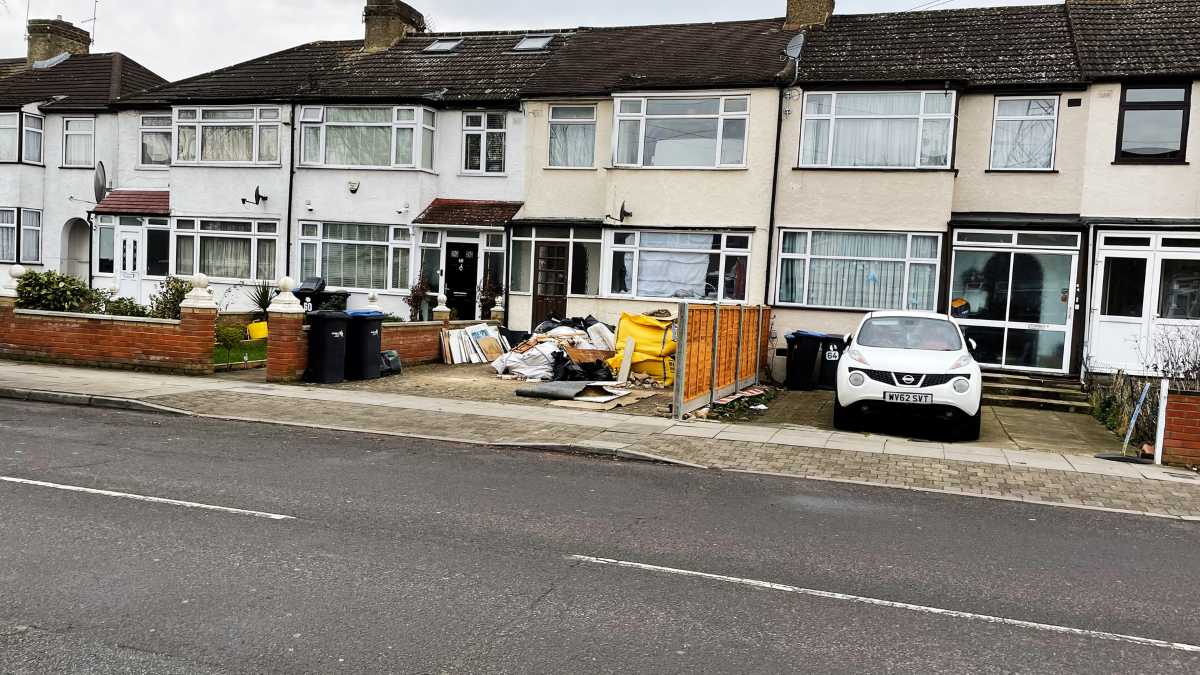
You’ll typically see thick external walls (concrete cavity construction with rendered or pebble-dashed finish), tall slender chimney stacks rising from the central walls, a characteristic concrete porch roof above the front door, and reinforcement marks visible above and below window openings on some variants. If you can get up into the loft, the party walls between adjoining properties are typically smooth and grey concrete rather than brick, which is the clearest single indicator you can check.
The clearest identification often comes from entering the loft space and inspecting the party wall directly, because brick construction has the obvious brick pattern whereas Easiform party walls are smooth concrete with horizontal casting lines visible from the original pour. Many Easiform properties have been modified over the decades though, so some have had brick cladding added externally that can make them look superficially like traditional brick houses, while others have had insulation added or finishes changed. The underlying concrete construction remains regardless of these modifications, but identification can sometimes require closer inspection than a casual glance from the street would allow.
The Common Problems You Should Know About
Several issues appear consistently in surveys of Easiform properties, and if you’re considering buying one or you already own one, these are the things worth understanding.
Steel Corrosion and Asbestos Risks
Corrosion of embedded steel reinforcement is the most significant structural issue you’ll encounter. The horizontal steel bars used in the cavity wall construction can corrode over time if the concrete cover around them is insufficient, and as the steel rusts it expands, which causes the surrounding concrete to crack and spall (flake off in patches). You’ll often see this as horizontal cracking along the reinforcement lines on the external walls, and most Easiform properties show some degree of cracking. The question is whether the extent is limited enough to be repaired cost-effectively or whether more substantial intervention is required.
Asbestos is the other major concern with Easiform properties built before the 1980s, and you’ll commonly find it in original cladding (soffits and fascia boards), rainwater goods (gutters and downpipes), bath panels and kitchen splashbacks, some partition walls, and stair linings in maisonettes and flats. Asbestos is safe when undisturbed but requires careful handling during any renovation or refurbishment work, so any surveys you commission should specifically identify any asbestos-containing materials before you make decisions about works.
Insulation, Damp, and Render Deterioration
Beyond these two main issues, you should also be aware that original Easiform construction has poor insulation by modern standards. Cavity wall insulation often isn’t feasible because of the construction method, and external insulation can be expensive, so EPC ratings typically sit in the D to F band without significant retrofit work. Some Easiform properties also experience damp and condensation issues, particularly surface condensation on cold concrete walls in winter, penetrating damp through render finishes that have failed, and rising damp where the asphalt damp-proof course has degraded over the years.
The original render or pebble-dash finishes are vulnerable to weathering over time too, with chimney stacks in particular tending to suffer render failure and cracking, so maintenance of the external finishes is important for keeping the property weatherproof.
What the Mortgage Situation Actually Looks Like
The mortgage situation for Easiform homes is more favourable than for many other non-traditional construction types, but it’s still narrower than for standard brick properties, so you need to understand what you’re working with.
Why Easiform Is Mortgageable in Principle
The main thing working in Easiform’s favour is that Laing Easiform houses were not designated as defective under the Housing Defects Act 1985 (now the Housing Act 1985), which means they don’t carry the legal designation that makes properties like Airey, Cornish Unit, and Reema homes effectively unmortgageable without repair to a recognised scheme. Several mainstream lenders will consider Easiform properties for residential mortgages, though typically with specific conditions including a satisfactory structural survey confirming the property’s condition, the valuer’s confirmation that the property is mortgageable, adequate specialist insurance arrangements, and sometimes a higher deposit requirement of 15 to 25% rather than the standard 5 to 10%.
Why the Lender Pool Is Still Narrower
What works against you when financing an Easiform property is that the “non-standard construction” label still narrows the lender pool considerably. Many lenders prefer not to lend on Easiform properties at all, even though they could legally do so, and the lender criteria can also change without notice, which means a buyer who got a mortgage offer in principle might find the criteria have shifted by the time they’re ready to proceed with the actual purchase. Pre-1945 Easiform properties (the thinner-walled Type 1 variants) face additional mortgage restrictions, and most mainstream lenders won’t touch these regardless of other circumstances.
For properties that mainstream lenders won’t finance, specialist lenders fill the gap. These typically charge higher interest rates but accept properties that high street lenders refuse to consider, and a mortgage broker familiar with non-traditional construction can identify which specialist lenders are most likely to lend on your specific property.
Selling a Laing Easiform Property

If you’re selling rather than buying, the Easiform classification affects both your timeline and the price you’ll get, so understanding your options matters.
Open Market and Auction Routes
Selling on the open market typically takes longer than it would for an equivalent brick property (often 6 to 12 months versus 3 to 6 months) because your buyer pool is narrower, and your estate agent may need to actively market the property’s mortgageability to overcome buyer concerns. Pricing typically reflects the construction type, with Easiform properties usually selling for 10 to 20 percent less than equivalent brick properties in the same area.
Auctions can work well for some Easiform properties, particularly where your buyer pool consists of investors and cash purchasers who don’t need mortgages. The auction format also forces faster decisions than the open market, which can be useful if you need certainty about the sale within a defined timeframe.
Selling to a Specialist Cash Buyer
For sellers prioritising speed above all else, specialist cash buying companies regularly purchase Laing Easiform properties without requiring the property to be reinforced or specially adapted, so working with a specialist cash buyer can mean completing the purchase in as little as seven days with all legal fees covered, with the construction type factored into the offer.
The trade-off with a cash sale is the typical 10 to 20 percent discount below open-market value. For Easiform properties though, this gap is often closer to what the open market would actually deliver once you account for the longer marketing time, the risk of failed sales, and the holding costs of an empty property, so the cash route is often more competitive than it first appears.
Buying a Laing Easiform Property
If you’re considering buying an Easiform property, several things are worth doing before you commit.
Survey, Mortgage, and Maintenance Budget
Get a specialist structural survey rather than relying on the basic mortgage valuation. A full RICS Level 3 survey by a surveyor experienced with non-traditional construction will identify the specific issues affecting the property, including steel corrosion, asbestos content, damp problems, and the condition of finishes, and the additional cost is genuinely worth paying compared to the risks of going in blind.
You should also confirm your mortgage situation early by speaking to a mortgage broker familiar with non-standard construction before committing to the purchase. Confirm specific lender criteria and any conditions that will apply to your application, because finding out at offer stage that the lender you’d assumed would lend has changed their criteria is a more expensive way to learn this lesson. Budget for ongoing maintenance properly too, because Easiform properties typically need more attention than equivalent brick homes, with render needing periodic care, asbestos management potentially required, and insulation upgrades worth considering for both your comfort and the property’s future resale value.
Thinking About Future Resale
You should also think about the resale implications before buying. The buyer pool for Easiform properties is narrower than for brick equivalents, which affects resale speed and may affect resale value when you eventually want to sell. Buyers planning to live in the property for many years are less affected by this than those buying with shorter timelines in mind.
The Bottom Line
Laing Easiform homes represent a significant portion of the UK’s housing stock and offer reasonable value compared to traditional brick equivalents. They’re not classified as defective, which makes them genuinely mortgageable through several lenders, though the non-standard construction label still affects market dynamics with smaller buyer pools and longer sales timelines than brick properties.
If you’re considering selling, the route depends on your time and circumstances. The open market works well for owners with time on their side, while specialist cash buyers work better for those needing certainty and speed. If you’re considering buying, Easiform construction is generally fine for long-term residence, though specialist surveys and informed mortgage advice are essential rather than optional. The price discount compared to equivalent brick properties usually reflects the construction type’s market realities fairly accurately.
FAQs
Are Laing Easiform homes defective?
No. Laing Easiform houses aren’t classified as defective under the Housing Defects Act 1985, which distinguishes them from other concrete construction types like Airey, Cornish Unit, and Reema homes. They’re considered non-traditional but mortgageable.
Can I get a mortgage on a Laing Easiform house?
Often yes, particularly for post-1945 properties, because several mainstream lenders will consider Easiform properties subject to satisfactory surveys and other conditions. Pre-1945 Easiform properties face significantly more mortgage restrictions though.
How can I identify a Laing Easiform house?
Key features include thick concrete cavity walls, distinctive tall chimney stacks, concrete porch roofs, and (in the loft) smooth grey concrete party walls rather than brick. Many properties have been modified externally over the years, so closer inspection may be needed.
What are the main problems with Laing Easiform homes?
Common issues include corrosion of internal steel reinforcement causing cracking, asbestos in original materials, poor thermal performance, render deterioration, and damp or condensation issues. Most are manageable with appropriate maintenance.
Do Laing Easiform houses contain asbestos?
Many pre-1980 Easiform properties contain asbestos in soffits, fascia boards, rainwater goods, bath panels, and some partition walls. Asbestos is safe when undisturbed but requires careful handling during any renovation work.
How much less do Laing Easiform houses sell for compared to brick?
Typically 10 to 20 percent less than equivalent brick properties in the same area. The exact discount depends on the property’s specific condition, your local market, and the buyer pool available at the time.
Can I sell my Laing Easiform property quickly?
Yes. Specialist cash buying companies regularly purchase Easiform properties without requiring special adaptations or reinforcement, with completion possible in as little as seven days. The offer reflects the construction type and any specific condition factors.