
Should You Renovate Before You Sell?
The instinct to renovate before selling is understandable. A property in better condition should sell for more, more quickly, and with less negotiation over defects. The reality is more complicated. Some renovations add far more than they cost. Others produce nothing beyond a nicer few weeks in the house before the buyer moves in. And a third category actively loses money, particularly when they’re done in the wrong style, at the wrong quality level, or on properties that don’t warrant the investment.
The Decision Framework
The question isn’t really “should I renovate?” but “which renovations, at what cost, would produce enough uplift in sale price to justify the investment and time?” That framing shifts the analysis from optimism about improvement to hard-nosed assessment of return on investment.
Three things matter more than anything else. First, the specific work you’re considering. Kitchens, bathrooms, and cosmetic redecoration behave completely differently from extensions, structural work, or system upgrades. Second, the price bracket your property sits in. Improvements that pay back well on a £700,000 property often don’t pay back on a £250,000 property, because buyers in different price ranges expect different things and pay differently for improvements. Third, the state of the local market. Strong markets reward improvements more generously than weak ones, and specific areas have their own preferences that don’t always match national patterns.
The Renovations That Usually Pay Back
Kitchens
A tired kitchen is one of the biggest single deterrents for buyers. A well-executed kitchen refresh, particularly one that doesn’t tear out perfectly good cabinets but replaces doors, worktops, and appliances, can add £15,000 to £25,000 to sale prices for typical mid-market properties. The cost of the work is usually £5,000 to £12,000, which produces a real return.
Full kitchen replacements make sense when the existing kitchen is genuinely beyond refresh. New layouts, moved plumbing, and complete replacement of everything typically cost £15,000 to £30,000 and can add £25,000 to £50,000 for the right property. The maths still works, though the risk of overspending is higher.
Bathrooms
Bathroom refreshes work similarly to kitchens. Retiling, new fittings, updated shower units, and modernised layouts typically cost £3,000 to £8,000 and can add £8,000 to £15,000 to sale prices. Full bathroom replacements cost more but usually deliver proportionally.
The exception is where the existing bathroom is fundamentally decent but tired. Cleaning, regrouting, replacing the shower screen, and repainting can cost £500 to £1,500 and produce almost the same buyer response as a full refresh, which is often a better return than more ambitious work.
Cosmetic Redecoration
The highest-return work is usually the simplest. Neutral repainting throughout, replacement of tired carpets, thorough cleaning, and decluttering can transform buyer response for £3,000 to £8,000. The return is difficult to quantify precisely, but the difference between a property that looks well-cared-for and one that looks worn can easily be £15,000 or more on sale price plus faster completion.
Garden improvements sit in the same category. Tidying, planting, replacing broken fences, and improving the front elevation cost relatively little and materially affect buyer first impressions.
The Renovations That Usually Don’t
Full Extensions
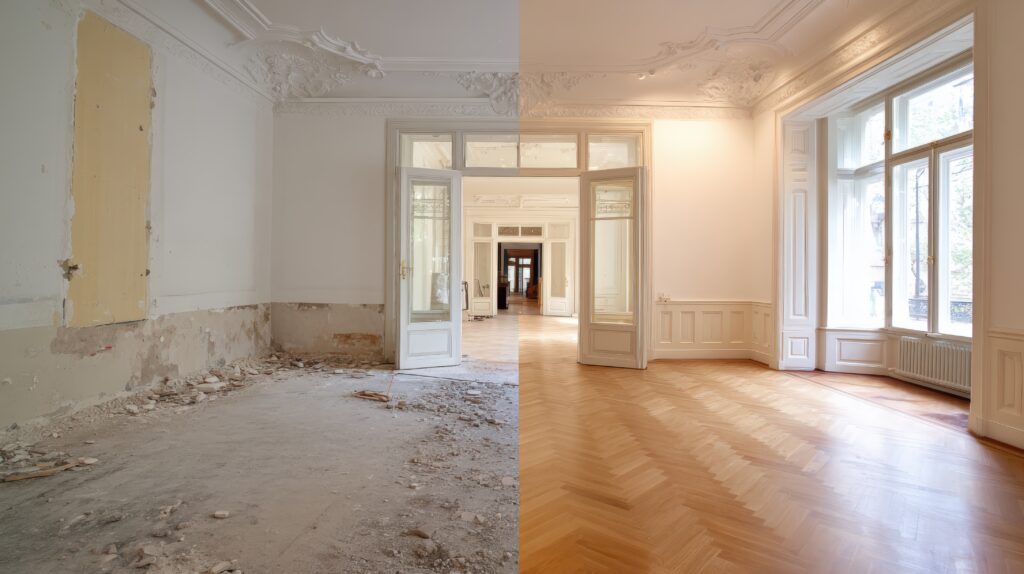
Extensions rarely pay back their full cost when done immediately before sale. A £60,000 rear extension might add £40,000 to £55,000 to sale value, meaning the seller effectively loses money on the work while spending months of disruption. Extensions make sense for owners who plan to use the extension themselves, not as pre-sale investments.
The exception is where the property has clear underlying constraints (very small kitchen, no downstairs toilet, awkward layout) that extensions specifically address. Even here, buyers often prefer to do their own extensions to their own specifications rather than paying for someone else’s choices.
Loft Conversions and Basement Digs
Similar to extensions but usually worse. Loft conversions cost £30,000 to £60,000 and typically add £25,000 to £50,000 to sale value. Basement conversions are worse still, sometimes costing £100,000 or more and adding proportionally less.
High-Spec Fittings on Modest Properties
Buyers in specific price brackets have expectations about finish quality. Fitting a £15,000 kitchen in a £250,000 flat rarely produces £15,000 in additional sale price because the buyer pool doesn’t value the premium finish. Matching the finish level to the property price and area is more important than maximising quality.
The Underlying Question of Value
Understanding what your property is currently worth is the essential starting point. Without that number, any renovation decision is speculative. A desktop property valuation can give you a reasonable current benchmark, letting you assess whether specific work would actually pay back or whether it’s a waste of money and time.
Estate agents will happily provide informal valuations, though these can be optimistic. Independent valuations from RICS surveyors cost £400 to £700 and give you a more grounded starting position for the decision.
When Not Renovating Is the Right Answer
For some sellers, the honest answer is to sell as-is at a lower headline price rather than invest in work they’d rather not do. Circumstances that support this include tight timeline pressure, limited cash for renovation costs, uncertainty about ability to project-manage the work effectively, and situations where the property has issues that renovation can’t fully address anyway.
In these cases, working with buyers who accept properties in their current condition produces cleaner outcomes than trying to force renovation-first sales that either don’t happen or lose money. For sellers ready to sell your house quickly with a trusted buyer, the direct route completes in seven to 28 days without any renovation work at all, with the trade-off being a price of 70% to 85% of open market value.
Making the Choice
The renovation decision comes down to three questions. Would the specific work meaningfully improve the property in ways buyers value? Would the cost be recovered plus reasonable margin in the higher sale price? Do you have the time and inclination to manage the work properly?
If the answer to all three is yes, targeted renovation usually pays back. If the answer to any is no, selling as-is is often the better choice.
FAQs
What’s the highest ROI renovation for a UK house sale?
Cosmetic refresh (repainting, cleaning, decluttering, minor repairs) typically produces the highest return on investment, often 3x to 5x the cost. Kitchen and bathroom refreshes come next, followed by garden improvements.
How long before selling should renovations be finished?
Ideally three to six months, allowing time for the property to settle and any snagging to be completed before marketing photos are taken. Rushed renovations show in the finish and can undermine the effect the work was meant to produce.
Do I need planning permission for renovations before sale?
Most cosmetic and internal work doesn’t require planning permission. Extensions, loft conversions, and external changes typically do. Building Regulations approval is separately required for structural work, electrical installations, and heating system changes.
Are renovation costs tax deductible on sale?
For your main residence, renovation costs generally aren’t tax deductible because the sale is exempt from Capital Gains Tax through Private Residence Relief. For investment properties, capital improvement costs can be deducted from the gain when calculating CGT on sale.
Is it worth staging a house for sale?
For higher-value properties in competitive markets, professional staging often produces meaningful uplift on sale prices and faster completion. For lower-value properties or slower markets, the cost typically doesn’t justify the return, though basic decluttering and neutral presentation still matter.