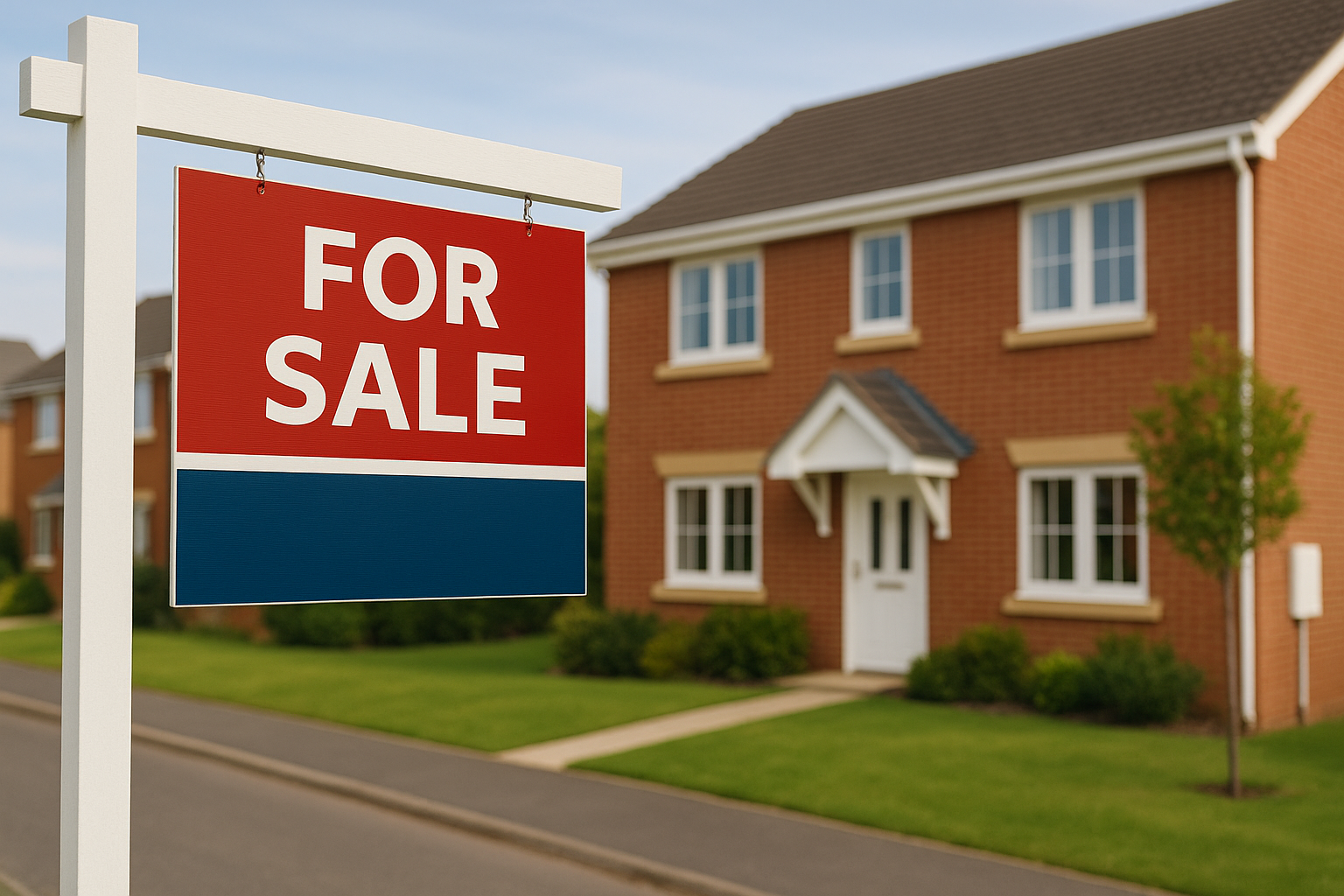
What is the Market Value of My House and Why Does it Matter?
If you own a home, chances are you’ve asked yourself at some point: what is the market value of my house? Sometimes it’s just curiosity after seeing a neighbour’s place go on the market. Other times it’s a serious question when you’re planning your next move. Either way, it’s a figure that can shape big decisions.
Your home is probably your biggest asset, so knowing the current market value of your house means you know what you can afford next, whether buyers will show interest and how smoothly the whole selling process goes.
And if you’re weighing up a fast house sale, that estimated market value becomes even more important, because it helps you decide if an offer is fair or not.
This guide explains what the market value of your house really means, how it’s worked out in practice and why getting it right matters when you come to sell.
What does market value actually mean?
It’s pretty simple, really. Your home’s market value is the figure your home could sell for today. It’s the realistic number a willing buyer would pay in the current market.
Set the price too high and your property risks sitting unsold. Go too low and you may sell quickly but lose money in the process. That’s why getting the market value right is such an important part of selling.
So how do you actually work out the current market value of your house in practice?
How is the market value of my house calculated?
There’s no secret formula here. It’s more about taking a balanced view of what your home offers against what buyers are paying for similar properties.
It’s usually based on a mix of factors:
- The location of the property affects value, with good schools, shops and transport links pushing prices higher.
- The size and layout of the home play a role, as more bedrooms and flexible space are usually worth more.
- The condition of the property influences value, since well-kept and modern homes attract stronger offers.
- Comparable sales provide evidence, because similar homes nearby show what buyers are actually paying.
- Market conditions make a difference, as interest rates, buyer demand and seasonal trends affect appetite.
Together, these give an honest picture of what your home is worth to today’s buyers.
How do I find the current market value of my house?
Start with the free online estimators. Rightmove and Zoopla offer quick ballpark figures using Land Registry data. They’re useful for a first look, but they can’t account for your home’s individual features.
Estate agents will happily give free valuations too. It’s sensible to get two or three to see a range. Just be cautious, because some agents overstate values to win your instruction.
For the most accurate figure, a surveyor’s valuation is best. Chartered surveyors provide formal reports that are especially useful if you’re remortgaging, dividing assets or need an independent valuation for legal reasons.
What are houses really worth right now?
National averages change monthly. In 2025, the market has been steady with modest gains:
- Halifax reported a record average price of £299,331 in August. That was up 0.3% from July, though annual growth slowed to 2.2%.
- HM Land Registry put the average at £269,000 in June. That was 3.7% higher than a year earlier and 1.4% higher than the previous month.
- Nationwide gave a slightly different picture, showing a dip in August with the average at £271,079, down 0.1% from July.
So depending on the source, the average UK property currently sits between £269,000 and £299,000. That’s why it’s important to look at your specific area and type of property, not just the headline numbers.
Why does the market value of my house matter?
Because it influences everything.
Price it fairly and you attract genuine buyers who are ready to move. Push it too high and the property lingers, which can eventually put buyers off. Price it too low and you lose money you could have used for your next deposit, renovations or other plans.
Market value also matters when lenders are involved. Mortgage providers send surveyors to confirm a property’s worth. If the lender values your home lower than the agreed price, the buyer’s mortgage may be reduced or withdrawn altogether. That’s a fast way for sales to collapse.
Getting the valuation right smooths out these bumps and keeps the sale on track.
What can influence the estimated value?
Plenty of things can move the needle:
- Improvements such as a loft conversion or new kitchen can raise value
- Neglected maintenance, like leaks, damp or old windows, will bring it down
- Local developments like new schools, shops or rail links can boost demand
- Noise, pollution or unpopular projects in the area can dent interest
Some of these are under your control, some are not. The key is knowing where you stand before you list.
What if the valuation feels too low?
It’s common for sellers to feel disappointed. Maybe you’ve invested heavily in improvements or you simply expected more.
The first step is to look at the evidence. If no similar homes nearby are selling for higher, it may be the market rather than your property. In that case, you can:
- Wait for the market to pick up
- Make further improvements to increase appeal
- List at the realistic price to achieve a quick sale
There’s no right answer here because it depends on your priorities. However, facing the reality early avoids wasted time later.
How often does market value change?
More often than many people think. The market can shift month to month.
In 2025, Halifax noted that the average home had gained less than £600 in value between January and August. That shows how modest and steady the market has been this year.
At other times, changes have been sharper. For instance during the pandemic boom, values jumped by thousands in just months.
That’s why it pays to keep checking if you’re planning to sell.
Regional differences matter too
Looking at government data, the national averages hide big regional gaps.
- In the North East, average prices rose by 7.8% in the past year to about £164,000
In London, growth was slower at 0.8%, though the average price remains over £561,000 - In Northern Ireland, growth has been stronger at 8.1% over the year
So a ‘good’ valuation depends entirely on your location. What looks like a fair price in one region may be very different in another.
Selling fast? Pricing matters even more
Setting a price close to market value is crucial, regardless of whether you’re handling relocation, divorce, inheritance or financial challenges. That’s because buyers are more likely to act when the figure feels fair.
That’s also where Sell House Fast can help. We provide cash offers based on the true market value of your property, and we often complete in as little as seven days. That removes the uncertainty of chains, surveys and drawn-out negotiations.
Sell at a fair price without the wait
If you’d rather skip the stress of guessing or waiting on the open market, we can help. At Sell House Fast we:
- Offer a tailored service to suit your situation
- Provide a simple, transparent process with no hidden fees (here’s how it works)
- Complete sales quickly, often in a matter of days
- Use experience and data to make selling smooth and reliable
If you’re ready to sell your house fast and make your move smoother get an instant online house valuation and see how easy your next step can be.